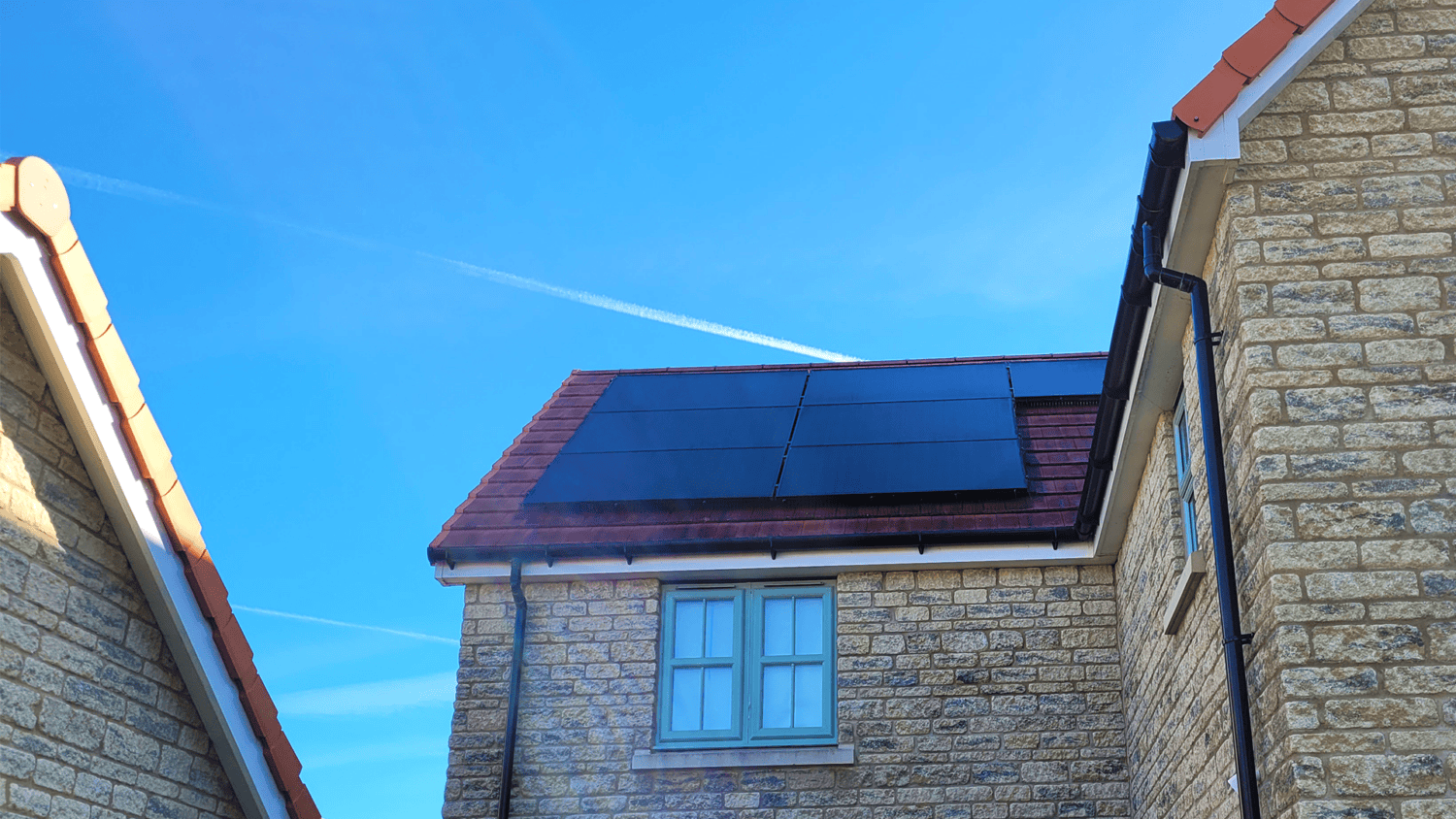

Imogen works for Good Energy. She is a supply customer, and she had solar panels installed at her family home by Good Energy.
In this article, she shares insights into how much money her solar panels have saved her each year, and whether she believes solar panels are worth it, with two full years of data to draw from.
About Imogen’s solar array
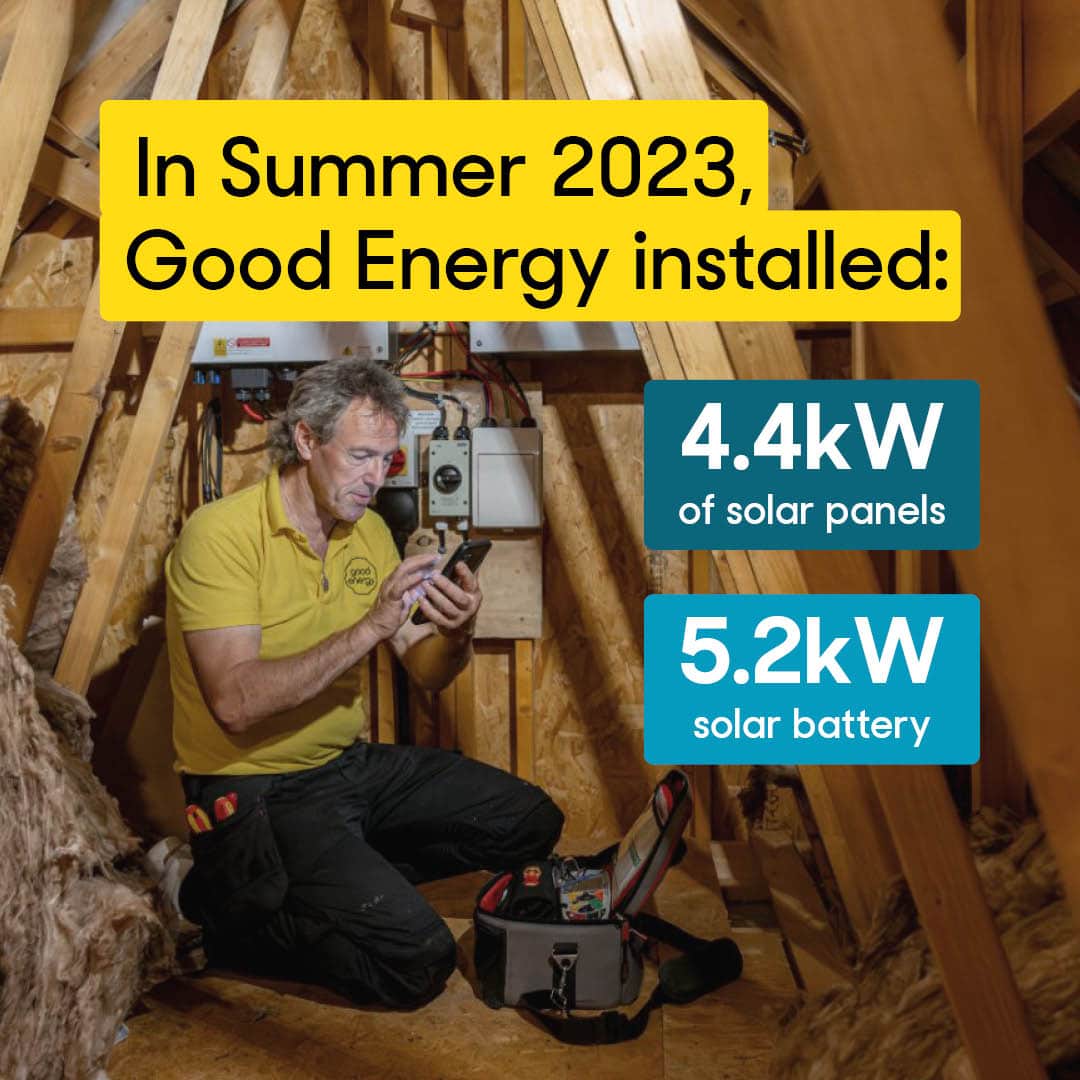
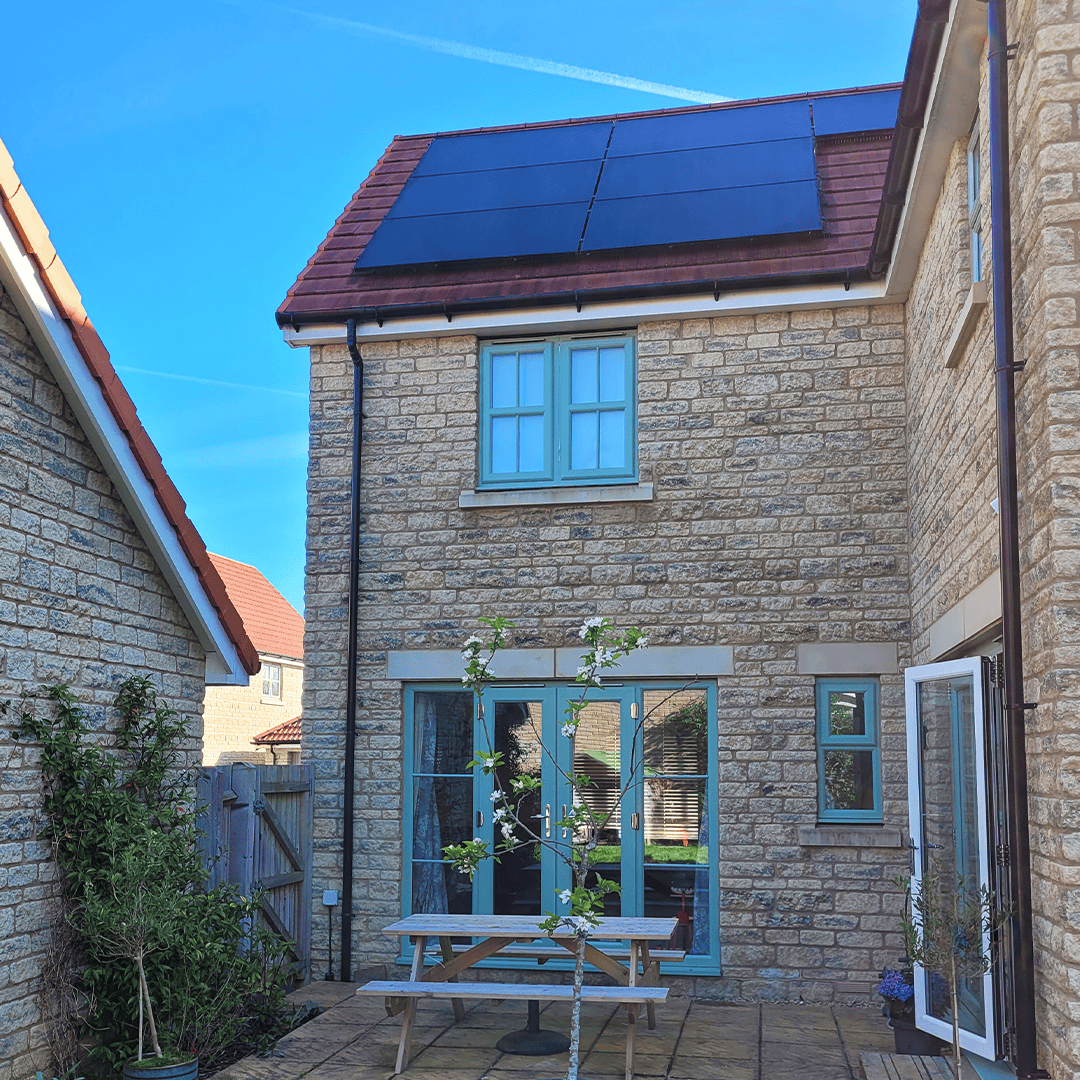
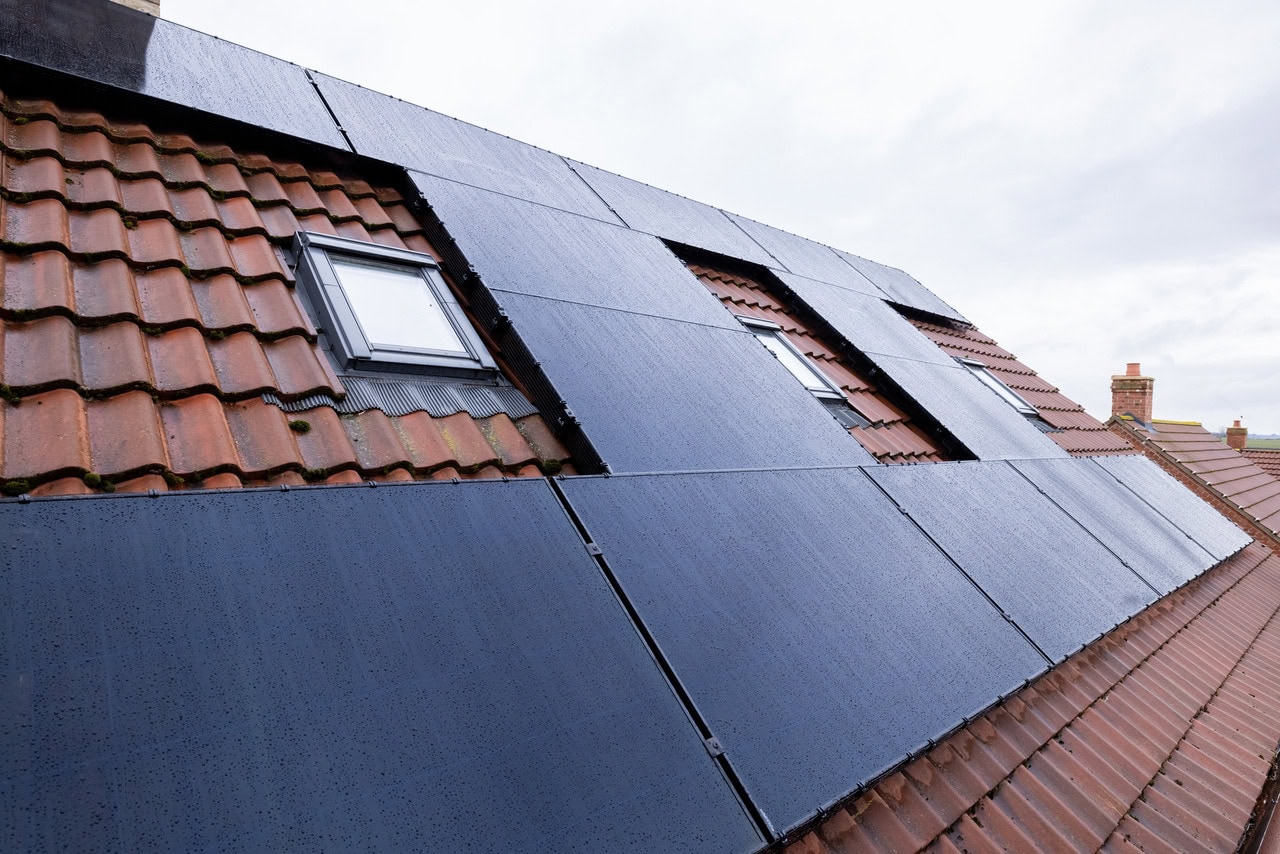
We have 12 solar panels installed on our rooftop with a total installed capacity of 4.4kW. They are split across two solar arrays – one facing South East and one facing South West.
We have a 5.2kW battery to store our excess solar energy, and a 3.6kW inverter. This means that our home can only draw 3.6kW of energy at any one time from our solar panels and battery before it will need to use energy from the grid.
How much have solar panels saved us on our energy bill?
In 2024, our tactic was to try to use as much of our solar electricity as we could. This meant letting our battery charge up fully from excess solar in the day, which we then used in the evening and overnight.
In 2025, we decided to join a Smart time of use tariff and charge up our battery on a low overnight rate. This meant that we stored less of our solar electricity in the battery and instead exported more. This led to low electricity bills in the winter as well as the summer.
| Year | Solar energy used at home (kWh) | Unit rate | Savings |
| 2024 | 1623.22 | 28.62p | £464.56 |
| 2025 | 1086.46 | 26.35p | £286.28 |
How much did we save from being on a Smart tariff?
In 2025, we joined Good Energy’s Smart EV tariff, which at the time had a low overnight rate of just 6.6p between midnight at 5am. We are able to store a maximum of 5kWh from the grid every night. In reality we stored less, particularly in the summer months, as our excess solar electricity kept our battery topped up.
The smart tariff helped us to save an additional £192.42 over the year, compared with being on a price capped, single rate tariff. This led to total energy bill savings for 2025 of £478.70 – slightly higher than in 2024; and leaving more of our energy to export for payment too.
Good Energy now requires customers to have an EV in order to join its Smart EV tariff – so when we renew, we plan to join the Heat Pump tariff instead – another smart, dual-rate tariff.
| Year | Off-peak grid electricity stored for peak use (kWh) | Unit rate | Savings |
| 2024 | n/a | n/a | n/a |
| 2025 | 974.3 | 6.6p | £192.42* |
*Savings are calculated by comparing the price of buying the electricity at the price cap with the price of buying the electricity at 6.6p / kWh.
How much have we earned through an export tariff?
In 2024, we were on Good Energy’s Exclusive rate export tariff, paying 25p throughout the year. This tariff is exclusively available to customers that chose Good Energy Solar to install their solar panels and battery, and is available for 12 months.
In 2025, we moved onto Good Energy’s standard export tariff, which at the time paid 15p / kWh, and now pays 12p / kWh. We exported a lot more power in 2025 due to filling our battery overnight from the grid; as well as it being a record year for sunshine.
Our export earnings are added as a credit on our energy account and help us pay for our other energy usage throughout the year.
| Year | Exported solar power (kWh) | Unit rate | Savings |
| 2024 | 2350.12 | 25p | £587.53 |
| 2025 | 3358.2 | 15p* | £503.73 |
Total annual savings from solar panels
The table below shows our total financial savings from two years of having solar panels. You’ll see there is a slight drop in year two – this is because we are being paid a lower rate for our exported electricity. In both years, we are averaging a return on investment of over 9.5%.
| Year | Energy savings (solar + battery) (£) | Exported energy (£) | Total savings (£) |
| 2024 | £464.56 | £587.53 (25p/kWh) | £1052.10 |
| 2025 | £478.70 | £503.73 (15p/kWh*) | £982.44 |
So are solar panels worth it?
In both 2024 and 2025, we’ve been very impressed by the savings from our solar panels and battery. They’ve kept our energy bills consistently low throughout the year, removing the worry about unpredictable energy costs. From a purely financial perspective, the system is delivering an average return of around 9.5% – 10% per year – significantly more than we’d get from a typical savings account.
Beyond the financial benefits, there’s a real sense of reassurance in knowing that the electricity we use is low-carbon and that our home is contributing to a greener energy grid. Solar panels have also future-proofed our home, making it ready for further low-carbon upgrades such as an electric vehicle or a heat pump.
So in my opinion, if you can afford the initial cost and you’re confident you’re getting a good price and service from your chosen installer, solar panels are absolutely worth it.
* Good Energy’s Solar Savings export tariff is a variable export tariff, so the rates are subject to change. It paid 15p/kWh during 2025, when these savings were recorded. The current Solar Savings export tariff rate is 12p/kWh. Export earnings will vary depending on the tariff rate available at the time your electricity is exported.